
Dr Pascal Vrticka (PhD, FHEA)
Associate Professor* in Psychology
(* Senior Lecturer)
Welcome and thank you very much for your interest in Dr Pascal Vrticka’s work.
Please feel free to explore the remaining sections of this website dedicated to Dr Vrticka’s research.
If you have any questions, please do get in touch. You can also follow Dr Vrticka on various social media channels.
Below, you can find links to recent highlights followed by a complete website menu.
Copyright © 2026 Dr Pascal Vrticka. All rights reserved.
Do not reproduce any materials from this website without explicit permission.
Highlights
Click on image for more information
Myth-Busting

Examples of the most prevalent myths surrounding attachment theory and science as well as more accurate and up-to-date explanations.
Attachment Q & A

Ask your questions about current attachment theory and research and spread state-of-the-art evidence-based information about attachment science.
Attachment Science
Summaries of recent studies and theoretical perspectives on attachment to help disseminating attachment science.
“Are Dads Wired Differently” Podcast

Dr Vrticka was a guest in the WHY? Podmasters podcast series hosted by Dr Anna Machin. They talked about the many changes that happen in men’s body and brain during the transition to fatherhood. Listen in!
Attachment & Synchrony
Podcast
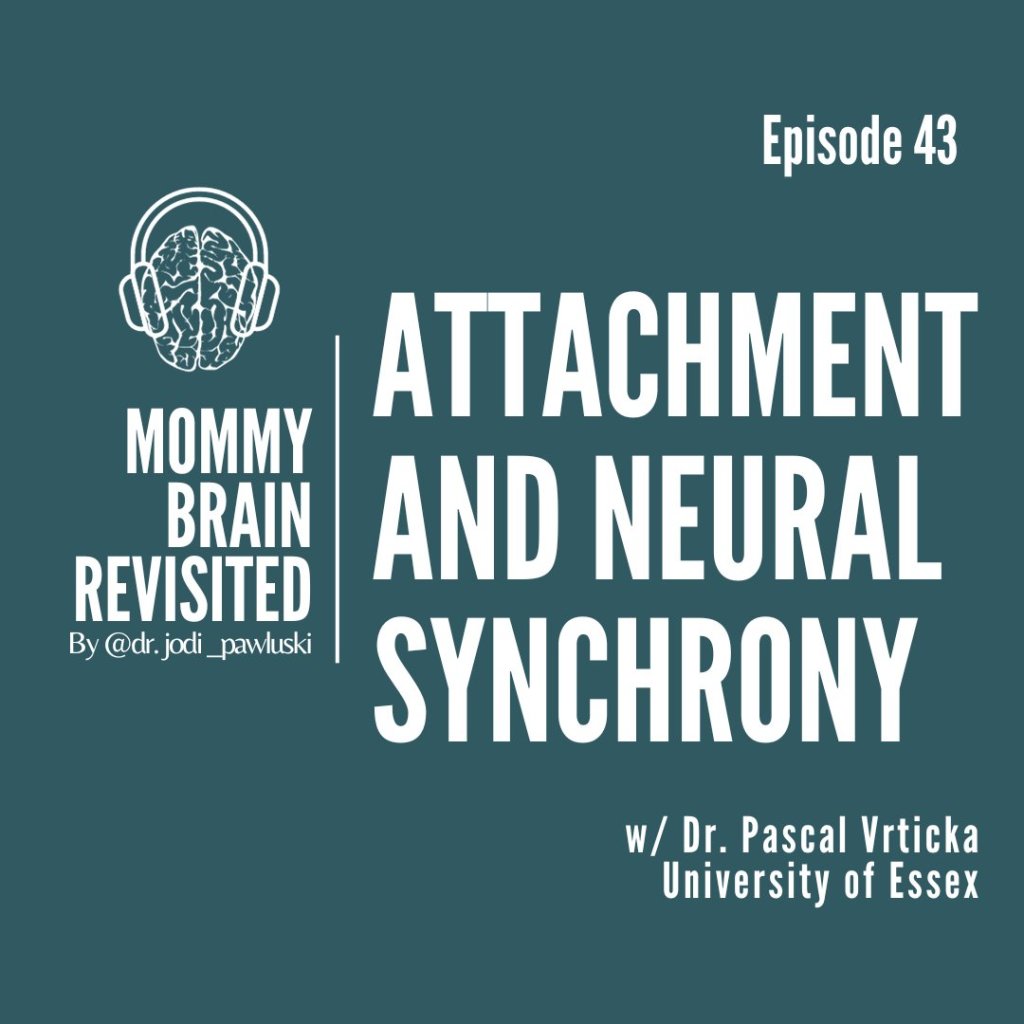
Dr Vrticka was a guest in the Mommy Brain Revisited podcast series hosted by Dr Jodi Pawluski. They talked about attachment, synchrony, dads, mums, and much more. Listen in!
“6 weeks for dads: meet the experts” Interview

Dr Vrticka was a guest in the “6 weeks for dads: meet the experts” interview series by the Fatherhood Institute as part of their ongoing campaign for improved paternity and reserved parental leave for fathers.
TEDx Talk
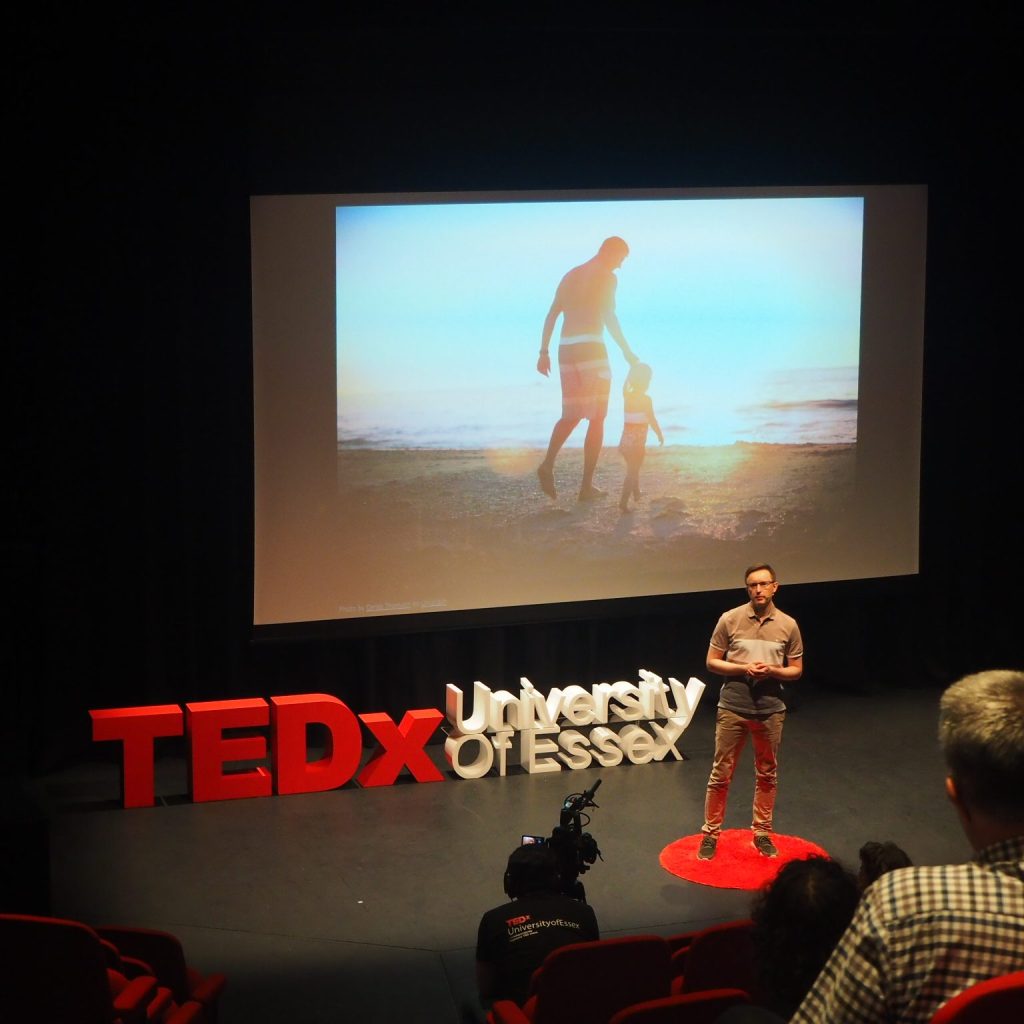
On May 14th 2022, Dr Pascal Vrticka participated in the TEDx University of Essex event and gave a talk on “Caring Dads: The Making of Involved and Confident Fathers”. You can now watch the recording on YouTube.
Caring Dads

A new website section is now available specifically dedicated to the social neuroscience of attachment and caregiving in fathers.
Babygro Charity

Dr Pascal Vrticka is an Associate Trustee of the UK Charity Babygro. Together, they published a free book for parents and are offering professional training for individuals working with children and families based on SoNeAt Lab’s research.
Secure Brain
Is your brain securely attached? If you are looking for a concise and accessible summary of the social neuroscience of human attachment, then this series is made for you!
Social Connection

How are attachment, social connection and energy conservation through social allostasis all linked to one another? Check out this accessible summary.
fNIRS Hyperscanning

Based on the first fNIRS hyperscanning workshop held at the University of Essex in May 2023, Dr Pascal Vrticka compiled an introduction to fNIRS hyperscanning covering the most important questions within the field.
Website Menu
Click on icon for more information
TEDx Talk

Dr Pascal Vrticka’s 2022 TEDx
University of Essex Talk
SoNeAt Lab

The Social Neuroscience of Human Attachment Lab (SoNeAt Lab): How to become involved (prospective students), current students & research topics, and student alumni & research topics
SIRG SoNeAt

Description of the Special Interest Research Group (SIRG) on the Social Neuroscience of Human Attachment (SoNeAt) within SEAS
About

Dr Pascal Vrticka’s CV as well as current teaching and research
SoNeAt

The Social Neuroscience of Human Attachment
Caring Dads

The social neuroscience of attachment & caregiving in fathers
Research Methods

Experimental methods used within
the SoNeAt Lab
Publications

List of Dr Pascal Vrticka’s publications
Talks & Presentations

List of Dr Pascal Vrticka’s talks and
other presentations –
check out the recordings &
posters available online
Blog

Dr Pascal Vrticka’s blog posts
Press

Press reports and other outlets about SoNeAt Lab’s research
Babygro Book

Free book for parents – including dads – based on Dr Vrticka’s functional neuro-anatomical model of human attachment (NAMA)
Latest Blog Posts

Hallucinated citations and phantom references
How generative AI undermines scientific accuracy and integrity ‘Hallucinated citations’ and ‘phantom references’ are citations and references invented by Large Language Models (LLMs) that look real but don’t exist. They’re a creative combination of author names, paper titles, journal names and publication years that mimic genuine publications but in reality are completely fictional. Why are…
Keep reading

Dads: The Forgotten Attachment Figures?
How 70 Years of Attachment Science Reshaped Fathers’ Role Not too long ago, I wrote the first entry of my attachment myth-busting series. In this series, I aim at providing concise examples of the most prevalent myths surrounding attachment theory and science as well as more accurate and up-to-date explanations. I am now revisiting some…
Keep reading

Why attachment is foundational for effective leadership
Introducing our new attachment-informed leadership (AIL) framework Leadership comes in many different shapes and forms. As eloquently pointed out by Stogdill, there are almost as many different definitions of leadership as there are people who have tried to define it. According to Northouse, it nonetheless appears that four components are central to leadership: (a) Leadership…
Keep reading
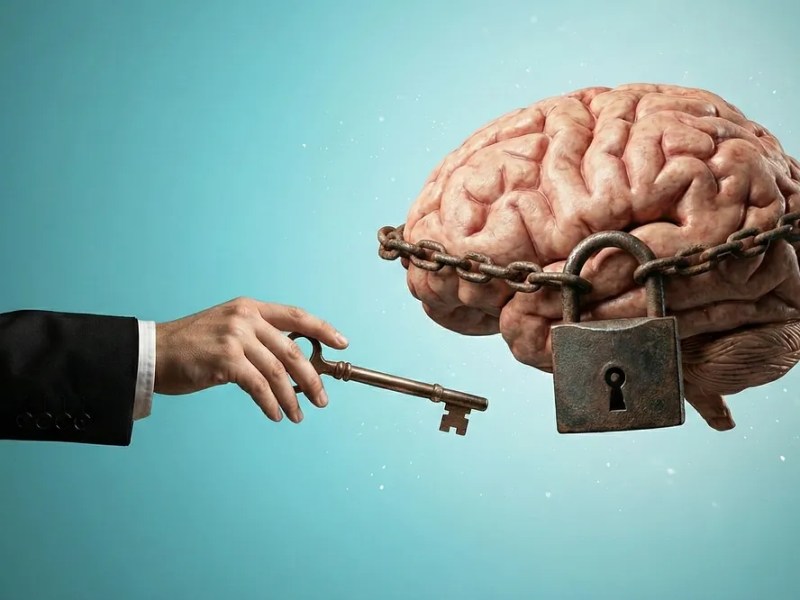
Is your brain securely attached? Part I: What’s the brain got to do with it?
It’s now been about twenty years since I embarked on my scientific journey to study the Social Neuroscience of Human Attachment (SoNeAt). This series with the overarching title “Is your brain securely attached?” is a reflection of my journey: how everything started, the challenges and achievements it entailed, the insights it revealed, whom I met along…
Keep reading
Lost in Translation: Disorganised Attachment
Not too long ago, I wrote the first post of my attachment myth-busting series. In this series, I aim at providing examples of the most prevalent myths surrounding attachment theory and science as well as more accurate and up-to-date explanations. My first attachment myth-busting post was about disorganised attachment — what it is, what it isn’t,…
Keep reading

So happy together: Deconstructing the right brain / left brain myth
A blog post co-written by psychotherapist Dr Ana Kozomara-Lund and social neuroscientist Dr Pascal Vrticka on the pervasive “left brain versus right brain” myth. Main take home messageThe “right brain” versus “left brain” concept intuitively resonates with many people’s self-perceived strengths and weaknesses. It offers a tangible explanation for understanding personality and cognitive styles and their underlying…
Keep reading

On the same wavelength—Do parents and children understand each other better if their brains are “in sync”?
Humans are social beings by nature. We often (unconsciously) imitate each other’s behaviors—think of yawning or laughing. Recent research shows that this imitation extends even beyond actions; it happens in our brains, too. State-of-the-art neuroimaging techniques reveal that interpersonal neural synchrony, where the brain activities of two or more interacting people align, is important for understanding others, starting…
Keep reading

Attachment Is the Fifth Element
A blog post co-written by psychotherapist Dr Ana Kozomara-Lund and social neuroscientist Dr Pascal Vrticka on why attachment is so important and special. Last week, we explored the ’attachment shadow’ – i.e., how the meaning of attachment concepts can get lost in translation and how they are often mingled with lots of neurobollocks. We did so because the ‘bright…
Keep reading

Attachment Shadow
A blog post co-written by psychotherapist Dr Ana Kozomara-Lund and social neuroscientist Dr Pascal Vrticka on the Barnum Effect, how the meaning of attachment concepts can get lost in translation, attachment neurobollocks, and, as a bonus: everything you ever wanted to know about attachment (but were afraid to ask).
Keep reading

Synced brains: why being constantly tuned in to your child’s every need isn’t always ideal
This post first appeared in The Conversation UK on 21 May 2024. It’s crucial for healthy child development that children can form secure attachment bonds with their parents. Decades of research identified one key ingredient for this process: the coordination of parents’ and children’s brains and behaviour during social interactions. Humans connect with each other by synchronising in many…
Keep reading
Something went wrong. Please refresh the page and/or try again.
 Dr Pascal Vrticka (PhD, FHEA)