
Background

How can we measure attachment?
Attachment arises from a complex interplay between psychological, behavioural, physiological and neurobiological processes.
It can be measured by traditional attachment tools like behavioural observation, interviews and self-reports.
Attachment can also be measured by social neuroscience methods like physiology (e.g., heart rate), endocrinology (e.g., cortisol or oxytocin secretion), genetics and epigenetics, neuroimaging (brain activation, structure and connectivity) and hyperscanning (2nd person social neuroscience to measure synchrony).
Purpose

Why do we need SoNeAt?
Social neuroscience data not only adds value but is necessary to fully understand the complex nature of attachment.
A social neuroscience perspective to attachment matters – without it, we are missing several important pieces of the puzzle.
We also need to make sure that we all use the same attachment language. SoNeAt can help providing a common scientific basis and terminology for fruitful discussions across fields.
Research

How does SoNeAt work?
Social neuroscience methods provide objective data obtained from single individuals or interacting dyads & groups.
This objective data can then be used to formulate theoretical frameworks, such as our functional neuro-anatomical models of organised and disorganised/disrupted attachment – NAMA and NAMDA.
Dr Vrticka‘s SoNeAt Lab and SIRG SoNeAt are leading in this approach, promoting a new area of research: the social neuroscience of human attachment (SoNeAt).
Please check the content below to learn more about SoNeAt. You will find lists of 1) recent blog posts & other resources, 2) recent talks available online to explore and 3) all available resources and topics as part of this section of Dr Vrticka’s website. Finally, you will find a contact form to get in touch with Dr Pascal Vrticka in case of questions or comments.
1) Recent Blog Posts & Other Resources (for a complete list, see here)
Please click on icon for more information
Attachment Insights

Examples of the most prevalent discussions surrounding attachment theory and science as well as the most accurate and up-to-date explanations.
Research Podcast
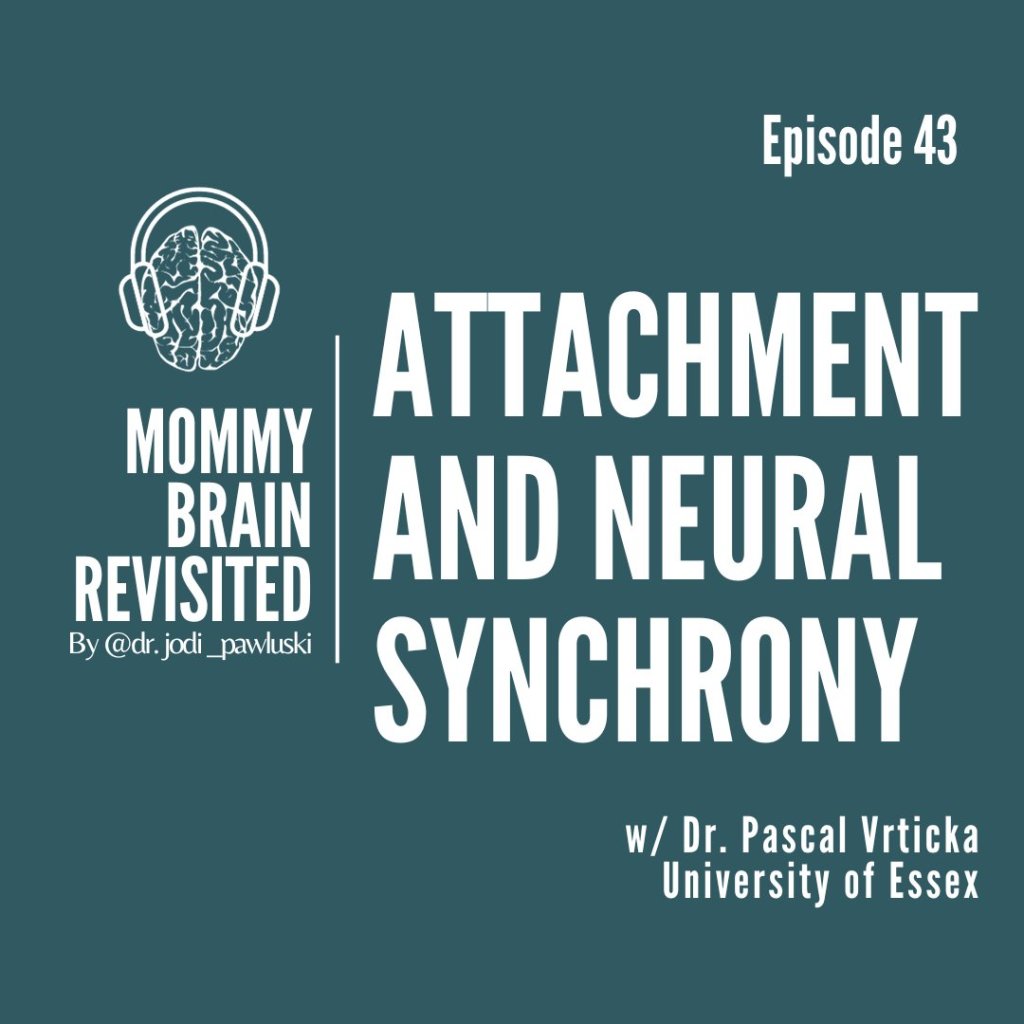
Dr Vrticka was guest in the Mommy Brain Revisited podcast series hosted by Dr Jodi Pawluski. They talked about attachment, synchrony, dads, mums, and much more. Listen in!
Attachment Science
Summaries of recent studies and theoretical perspectives on attachment to help disseminating attachment science.
Attachment Q & A

Ask your questions about current attachment theory and research and spread state-of-the-art evidence-based information about attachment science.
Secure Brain
Is your brain securely attached? If you are looking for a concise and accessible summary of the social neuroscience of human attachment, then this two-part series is made for you!
Stay tuned for a revamp and extension on Dr Pascal Vrticka’s Substack!
Confusion

In this piece for The Conversation UK, Dr Vrticka writes about “Attachment theory: what people get wrong about pop psychology’s latest trend for explaining relationships“. Excellent resources to avoid further confusion about attachment language have been provided by the Society for Emotion and Attachment Studies (SEAS) by means of a free online guide.
What about Dads?

Dr Vrticka wrote a blog post for Dadvengers about the social neuroscience of attachment and caregiving in fathers: “Are Dads Wired Differently – The Truth About Becoming A Dad“. More detailed information and additional resources are available in the website section “Caring Dads“.
Babygro Charity

How do our babies’ brains develop, and how does responsive communication between parent and baby lead to later life (mental) health and wellbeing? The Babygro Book for Parents is based on Dr Vrticka’s research and theory. Available online (free) and in print (£10).
Social Neuroscience
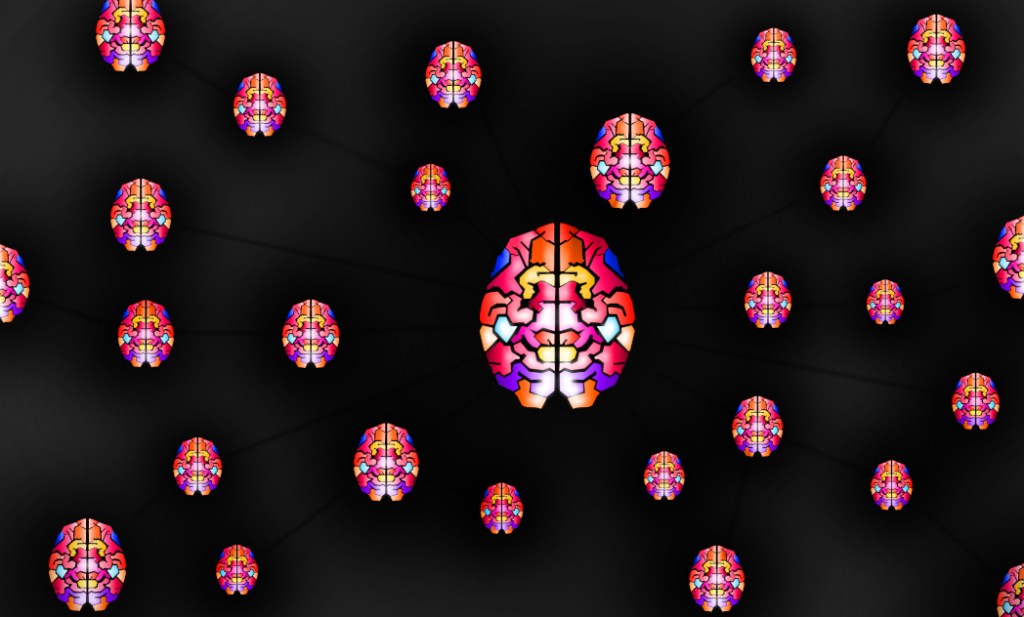
A summary of attachment theory from a social neuroscientist’s perspective. This includes the recently formulated functional neuro-anatomical models of organised and disorganised attachment – NAMA and NAMDA.
Social Connection

How are attachment, social connection and energy conservation through social allostasis all linked to one another? Check out this accessible summary of our newest theory as part of SoNeAt.
fNIRS Hyperscanning

Based on the first fNIRS hyperscanning workshop held at the University of Essex in May 2023, Dr Pascal Vrticka compiled an introduction to fNIRS hyperscanning covering the most important topics within the field.
2) Recent Talks Available Online (for a complete list, see here)
Please click on image on the left for more information

TEDx University of Essex 2022 Talk “Caring Dads: The Making of Involved and Confident Fathers“
Presented by Dr Vrticka on May 14, 2022 at the TEDx event “Are you paying attention?”. More resources on the social neuroscience of attachment & caregiving in fathers are available here.

Podcast as part of Why? Podmasters UK series on “Are dads wired differently?” hosted by Dr Anna Machin with Dr Vrticka as guest. Released on 25 December 2023.
Podcast as part of Mummy Brain Revisited on “Attachment and Neural Synchrony”.
Hosted by Dr Jodi Pawluski with Dr Vrticka as guest. Released on 05 October 2023.
Keynote Lecture “Charting the Social Neuroscience of Human Attachment”.
Presented by Dr Vrticka at the Social Neuroscience of Relationships, Attachment and Caregiving (SNRAC) Conference held at the University of Essex (Colchester, UK) on August 14, 2023.
Invited Virtual Keynote “Is your brain securely attached? A social neuroscience perspective on attachment”
Presented by Dr Vrticka at the British Association for Community Child Health (BACCH) Annual Scientific Meeting 2022 on September 20, 2022.
Invited Virtual Event: “Why attachment matters in social neuroscience”
Presented by Dr Vrticka for Scottish Attachment in Action (SAIA) on September 01, 2022. Due to a slight issue with the presentation recording, some slide content is not always visible. Slides can therefore be separately downloaded here. The accompanying blog post is available here.
Invited Keynote Lecture “Attachment Theory Revisited – A 21st Century Social Neuroscience Perspective”
Presented by Dr Vrticka at the 23rd Psychology Days in Zadar, Croatia on May 26, 2022.

Invited Virtual Keynote “Are we on the same wavelength? Individual differences in interpersonal neural synchrony”
Presented by Dr Vrticka at the Affect, Personality and the Embodied Brain (APE) 2022 Meeting on September 22, 2022.
3) All Available Topics & Resources
Please click on icon for more information
CARE Studies

Series of 3 studies on parent-child interaction, attachment, and caregiving
Attachment Theory
A social neuroscientist’s perspective of attachment theory
NAMA & NAMDA

Functional neuro-anatomical models of human attachment
Attachment in Adolescence

SoNeAt Lab’s research on the neural substrates of attachment in adolescence
Attachment in Children and Parents

SoNeAt Lab’s research on the neural substrates of attachment in children and parents. For specific content on dads, please click here.
Caring Dads

The social neuroscience of attachment & caregiving in fathers
Bio-Behavioural Synchrony & Inter-Brain Coherence
SoNeAt Lab’s research on bio-behavioural synchrony & inter-brain coherence
Genetics & Epigenetics of Attachment

SoNeAt Lab’s research on the genetics and epigenetics of attachment
Longitudinal Attachment Research

SoNeAt Lab’s involvement in longitudinal attachment research
Attachment Disruption and Disorganisation
SoNeAt Lab’s research on abuse, neglect, and emotional maltreatment as well as disorganised attachment
Attachment, Social Connection & Allostasis
The tight link between social connection, attachment and co-regulation through social allostasis
Contact Form
Please use the contact form below to get in touch with Dr Vrticka if you have any questions about the Social Neuroscience of Human Attachment.


 Dr Pascal Vrticka (PhD, FHEA)