
Caring Dads:
The Social Neuroscience of Attachment & Caregiving in Fathers
Background

Dads’ involvement in caregiving activities has almost quadrupled since the 1950’s (certainly in western countries including the UK).
The recent COVID-19 pandemic with its lockdowns has further accelerated this development (see here and here).
Fathers are also increasingly recognised by attachment theory as equal and capable caregivers and attachment figures.
Evidence

For a long time, dads were thought to be wired differently and thus not biologically made to be parents.
Recent evidence clearly shows that this is not the case. Men’s body and brain changes extensively when they become fathers.
Yet, dads (like mums) are not born, they are made. Practice is key. Dads need as much time as possible to interact & bond with their kids.
Our Research

Dr Vrticka and his SoNeAt Lab have recently started focussing particularly on fathers and the father-child relationship.
Two SoNeAt Lab studies show that dads’ brain structure & father-child brain-to-brain synchrony are linked with dads’ caregiving beliefs.
More research is underway on the social neuroscience of attachment and caregiving in dads, mums and families.
Please check out the available resources & topics below. A more detailed summary of the social neuroscience of attachment & caregiving in fathers is also available when scrolling down. Please use the contact form if you wish to get in touch with Dr Vrticka to ask questions, make comments or with ideas on how to use the resources provided here. Thank you!
Resources & Topics
Please click icon for more information.
“Are Dads Wired Differently?” Podcast

Dr Vrticka was a guest in the WHY? Podmasters podcast series hosted by Dr Anna Machin. They talked about the many changes that happen in men’s body and brain during the transition to fatherhood. Listen in!
TEDx Talk
“Caring Dads”

Dr Vrticka participated in the University of Essex TEDx 2022 event and gave a talk on “Caring dads: The making of involved and confident fathers“. Listen in!
“6 weeks for dads: meet the experts” Interview

Dr Vrticka was a guest in the “6 weeks for dads: meet the experts” interview series by the Fatherhood Institute as part of their ongoing campaign for improved paternity and reserved parental leave for fathers.
Babygro Book

Free book for parents – including dads – based on Dr Vrticka’s functional neuro-anatomical model of human attachment (NAMA)
Podcast
Dr Vrticka was a guest in the Mommy Brain Revisited podcast series hosted by Dr Jodi Pawluski
Blog Post 1

Blog post “Men as Fathers and Caregivers: Insights from Two New Social Neuroscience Studies”
Blog Post 2
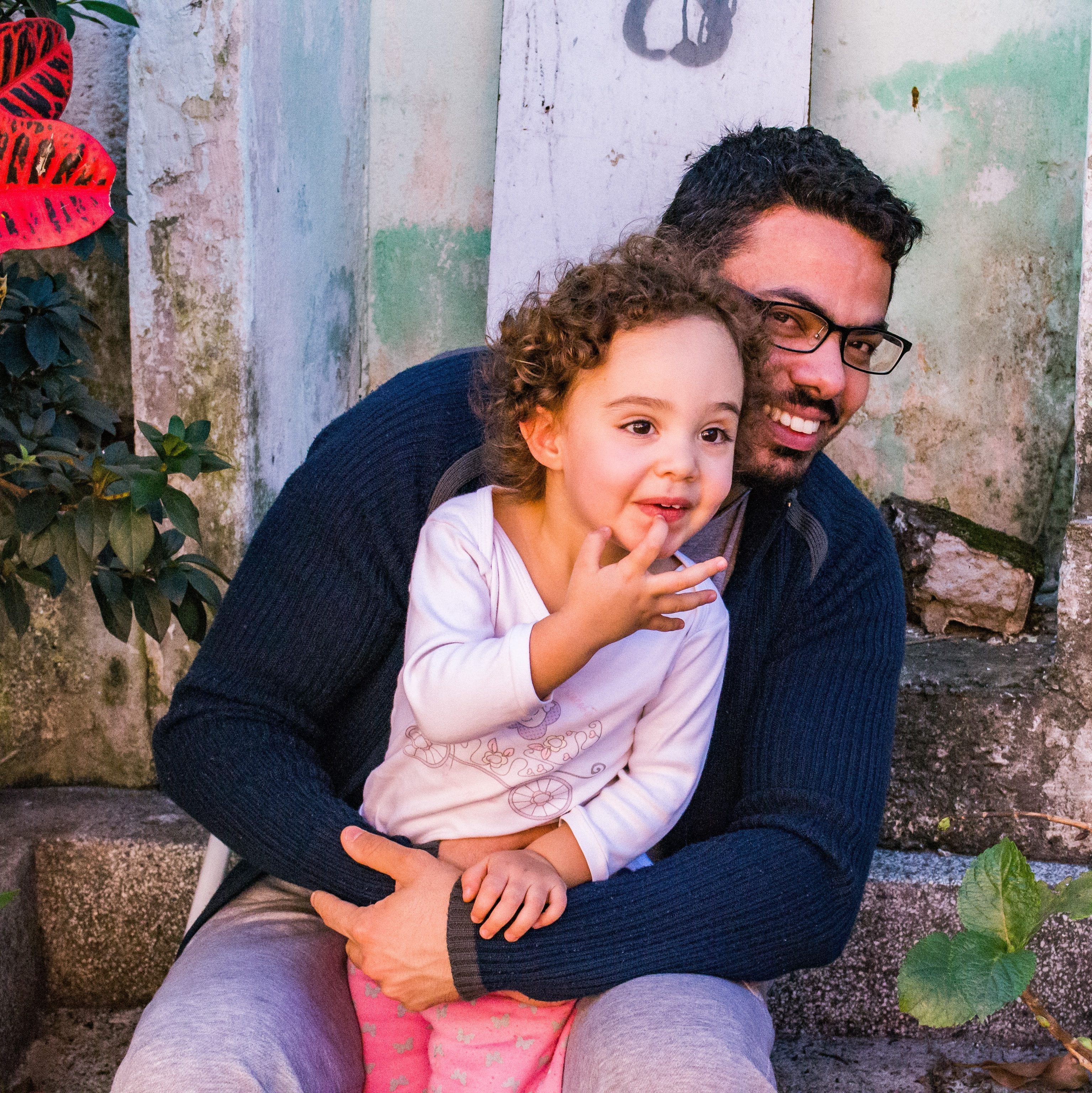
Blog post “Are Dads Wired Differently – The Truth About Becoming A Dad” written by Dr Vrticka for Dadvengers in November 2022
Talk Recording 1
Postgraduate Virtual Week (University of Essex) virtual presentation by Dr Vrticka in May 2021
Talk Recording 2

SoWhat? Knowledge Exchange Seminar on “Attachment and Social Neuroscience” hosted by Cattanach
Detailed Summary

Today’s dads are more involved in childcare than ever before
Dads are nowadays more involved in childcare activities than ever before. Since the 1950’s, the waking time dads spend with their kids has nearly quadrupled (certainly in many western countries including the UK – see here). This important change in dads’ daily routine clearly reflects their wish to play a strong and active role in their children’s lives.

The COVID-19 lockdowns made dads spend even more time with their kids
A similar – but strongly accelerated – development was observed by the UK Fatherhood Institute during the first COVID-19 lockdown across Great Britain in 2020, which saw many dads returning home and every day spending twice as much time with their children than usual. Very interestingly, a majority of dads reported afterwards that spending more time with their kids transformed not only the father-child relationship but also family functioning overall in many positive ways (see Lockdown Fathers Study). Subsequent research has now even shown that the substantial extra time many fathers spent with their children may have prompted lasting shifts in dads’ caregiving roles.

Modern attachment theory & research appreciate dads’ crucial role as attachment figures
The above societal changes are mirrored by changes within attachment theory – nicely summarised by Inge Bretherton in 2010. While fathers were not even mentioned in John Bowlby’s initial writings, dads’ importance as caregivers and attachment figures for their children and family functioning more globally are nowadays strongly appreciated.
Two questions regarding fathers’ role in the context of infant attachment are nowadays prominently discussed – as nicely summarised in this book chapter by Or Dagan and Abraham Sagi- Schwartz.
The first question asks: “Does the number of secure attachments matter in predicting developmental outcomes?“. Two possible answers are provided, namely (a) The more secure attachments the infant forms, the better the developmental outcome – additive hypothesis -, and (b) A secure attachment to one parent buffers an insecure attachment to the other – buffering hypothesis.
The second question asks: “Does one parent contribute more than the other to developmental outcomes?“. Again, two possible answers are provided, namely (a) A secure attachment to either parent leads to better outcomes than a secure attachment to the other – hierarchical hypothesis -, and (b) A secure attachment to either parent leads to similar outcomes as a secure attachment to the other – horizontal hypothesis.
The above considerations are part of an overall integrative hypothesis stating that “the configuration of infants’ attachment networks with both parents predicts early childhood outcomes better than infants’ attachment relationships with either parent alone“.
Recent research is examining above hypotheses. For example, a meta-analysis by Dagan and colleagues (see here) looked at configurations of mother-child and father-child attachment as predictors of internalising and externalising behavioural problems. Very interestingly, the authors found (a) an increased vulnerability to behavioural problems when children have insecure or disorganised attachment to both parents, and (b) that mother-child and father-child attachment relationships may not differ in the roles they play in children’s development of internalising and externalising behavioural problems. These findings nicely align with similar results from another meta-analysis by Deneault and colleagues (see here).
An additional meta-analysis by Dagan and colleagues (see here) looked at mother–child and father–child attachment relationships as predictors of child language competence. Again very interestingly, they found that children with two secure attachment relationships had higher language competence scores compared to those with one or no secure attachment relationships. Furthermore, their data revealed that mother–child and father–child attachment quality did not differentially predict language competence.
Together, these data support the notion of a comparable importance of attachment to both parents in predicting developmental child outcomes and thus the horizontal hypothesis. Furthermore, they provide evidence for both the additive and buffering hypotheses.
As summarised in a great accessible article with the title “Secure attachment to both parents − not just mothers − boosts children’s healthy development“:
Mothers and fathers are equally important in raising children and setting them up for optimal developmental trajectories.
An excellent source of further information also is the Special Interest Research Group on Father-Child Attachment & Relationships (SIRG FCAR) as part of the Society for Attachment and Emotion Studies (SEAS).

But dads are still facing many challenges
Despite such extensive changes in society and attachment theory regarding dads’ role in childcare and as primary attachment figures, dads are still facing many challenges. Very often, dads’ physical and mental health is ignored, they are excluded from maternity services and they are facing very inflexible workplace policies. All these challenges make it very hard for fathers to have enough time for high-quality interactions enabling them to bond with their children.
Another problem are prevailing gender inequalities across society that lead to mothers still taking on the vast majority of childcare. As Elliott Rae has very nicely explained: “We need to evolve the role of the father in the family. But if we are going to change fatherhood, we first need to change manhood.” What thus is needed, is a shift in current perceptions of masculinity, which includes men’s role as fathers and caregivers for their children. Such a shift in masculinity perceptions is crucial, because recent research clearly shows that young men “copy” their fathers’ masculinity.
To change masculinity perceptions in future generations, we need to change today’s dads’ masculinity!

Dads are neurobiologically wired to be parents
One way of tackling the still prevalent challenges today’s dads are facing, is to raise awareness of the crucial role father-child bonds play for child development and family functioning. However, research in general, and social neuroscience research on fathers and the father-child relationship in particular remains scarce. When looking at all available scientific papers on parenting from a social neuroscience perspective between 1960 and summer 2022, papers in mothers are vastly outnumbering papers in fathers by more than five times. This persisting and strong bias towards mothers and the mother-child relationship in social neuroscience is stunning, because the data that is available on dads and the father-child relationship speaks a very clear language.
Dads (like mums) are biologically wired to be parents. Like for mums, dads’ body and brain undergo important and persistent changes during the transition to parenthood.
One branch of social neuroscience research is looking at biological changes in fathers mainly related to hormonal levels of oxytocin, vasopressin, testosterone, oestradiol and/or cortisol. A very nice recent study – which also comprehensively summarises the so far available literature – was published by Marian J. Bakermans-Kranenburg and colleagues in 2022 (see here).
Another branch of social neuroscience research focusses on changes in brain structure, function and synchrony in dads. A strongly recommend reading is the excellent review article by Abraham & Feldman (2022) with the title “The Neural Basis of Human Fatherhood: A Unique Biocultural Perspective on Plasticity of Brain and Behavior” (see here).
However, dads are made, not born…!
Crucially, however, accumulating social neuroscience evidence also suggests that dads (and mums) are made, not born (see also this very nice Opinion Guest Essay by Darby Saxbe and Sofia Cardenas in The New York Times). Although the neurobiological wiring is naturally in place, it needs to be actively used, refined and strengthened.
For dads, the amount of neurobiological changes that happen during their transition to fatherhood crucially depend on at least three factors: 1) the amount of time they spend with their kids, 2) the quality of the time they spend with their kids, and 3) the confidence in and reward experienced from their new role as a parent.
It therefore is absolutely vital to give dads as much time and space as possible to bond with their kids, to make this bonding time as rewarding and positive for dads as possible, and to boost dads’ confidence by changing societal patterns and political decisions in dads’ favour.

There is a cost of caregiving for dads, too
Another crucial insight is that because men’s body and brain undergo important changes during their transition to fatherhood, this makes them vulnerable to developing mental health issues.
In a recent study by Darby Saxbe and Magdalena Martínez-García accessibly summarised here, the authors found that cortical volume reductions in men transitioning to first-time fatherhood reflect both parenting engagement and mental health risk. On the one hand, fathers who reported stronger prenatal bonding with the unborn infant, and planned to take more time off from work after birth, showed larger cortical volume decreases. Larger reductions in gray matter volume also emerged among fathers who reported stronger postpartum bonding with the infant, lower parenting stress, and more time spent with their infant.
On the other hand, however, larger volume reductions also predicted more postpartum sleep problems and higher levels of postpartum depression, anxiety, and psychological distress in fathers. These results therefore suggest that perinatal grey matter volume reductions may not only reflect greater parenting engagement but also increased mental health risk in new fathers.
These findings have multiple impacts on policy, intervention, and public health. Crucially, they reinforce the importance of reducing stress and protecting men’s time during new parenthood through policies such as paid paternity leave and advocacy efforts to normalise men’s fatherhood in the workplace.
It therefore is absolutely vital that dads get as much support as needed and that sufficient and efficient mechanisms are in place to detect and treat mental health conditions in fathers that arise as part of their transition to fatherhood.

Our SoNeAt Lab’s research on Caring Dads
In three of our own investigations as part of the CARE Studies conducted within the SoNeAt Lab, we recently looked at dads’ brain structure – and particularly hypothalamus volume – as well as father-child interpersonal neural synchrony – how dads’ and kids’ brains get “in sync” with one another during cooperative puzzle play. Crucially, in both investigations, we linked these social neuroscience measures with dads’ caregiving beliefs – how much importance dads attributed to their role as a parent, how much time dads spent with their children, and how rewarded dads felt when interacting with their children.
In the first investigation, we observed that hypothalamus volume was larger in those dads with stronger caregiving beliefs. In the second investigation, we found that interpersonal neural synchrony during cooperative puzzle play was stronger in those father-child dyads in which dads reported stronger caregiving beliefs. These findings are very interesting, because 1) the hypothalamus is importantly involved in coordinating attachment and caregiving behaviour (i.e., as primary site of oxytocin synthesis), and 2) interpersonal neural synchrony constitutes a fundamental mechanism for social interaction, learning and therefore the parent-child relationship and child social, emotional and cognitive (brain) development. These findings are further explained in a blog post written by Dr Vrticka in October 2021 (see also Resources & Topics above).
Finally, in the third investigation, we saw that fathers display increased interpersonal neural synchrony when solving puzzles with their children as compared to mother-child pairs. Conversely, fathers showed lower behavioural synchrony with their children as compared to mother-child pairs. Our findings suggest that increased father-child interpersonal neural synchrony may represent a compensation mechanisms for otherwise less attuned interaction elements. Enhancing father-child interaction may thus not always mean to indiscriminately increase synchrony but to find the optimal level of synchrony – which may not be the highest. Conversely, increased father-child synchrony may represent a novel correlate for interaction and relationship difficulties. These findings are summarised in an English press release and German press release and discussed in a Forbes article.
Please be aware that the results of the three investigations described above emerged from correlations performed in a cross-sectional design – i.e., studies with one measurement time point only. It therefore is not possible to attribute any cause and effect at this time. More research with a longitudinal design – i.e., studies repeatedly measuring the same participants over time – is needed. Nonetheless, as associations with dads’ caregiving beliefs emerged with two independent measures of fathers’ brain structure and father-child interpersonal neural synchrony, we are confident that these associations are meaningful and robust. And we are looking forward to replicating and further extending these findings in the future.
Contact Form
Please use the contact form below to get in touch with Dr Vrticka if you have any questions about the The Social Neuroscience of Attachment & Caregiving in Fathers.


 Dr Pascal Vrticka (PhD, FHEA)